


A cost breakdown that reveals price stability, energy autonomy, and zero emissions
The 2022 Benchmark: Gas vs. Heat Pump vs. Solarwarp
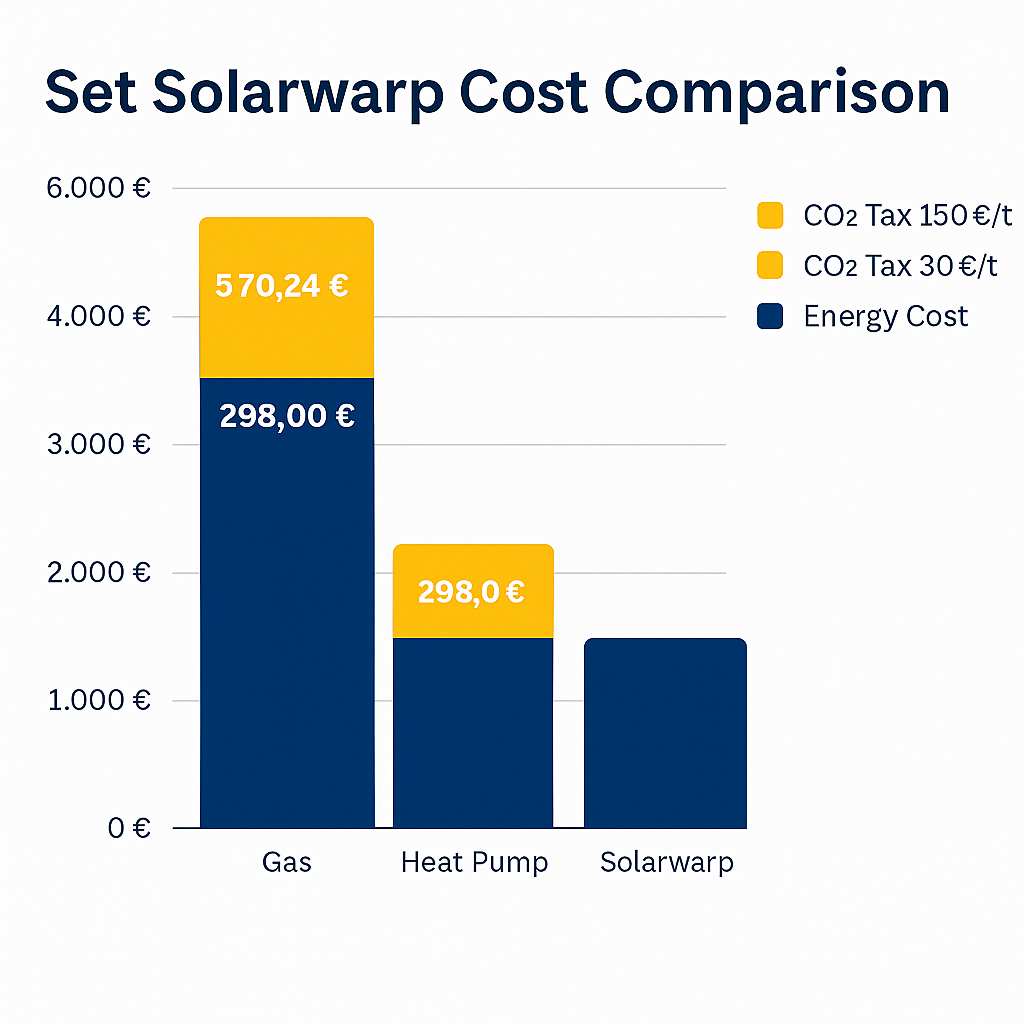
In 2022, German households faced skyrocketing energy costs and mounting CO₂ taxation. This visual comparison shows the cost of three heating systems:
Gas Heating
Heat Pump
Heatfloh (Solarwarp prototype tech)
| Heating Method | Energy Cost | CO₂ Tax (30 €/t) | CO₂ Tax (150 €/t) | Total Max Cost |
|---|---|---|---|---|
| Gas | 4,420 € | +142.56 € | +570.24 € | ~5,000 € |
| Heat Pump | 1,800 € | +57 € | +228 € | ~2,000 € |
| Solarwarp | 2,380 € | 0 € | 0 € | 2,380 € |
Key Insights
Gas heating became the most expensive option, due to volatile energy prices and rising carbon taxes.
Heat pumps performed better, but still incur emissions indirectly through electricity consumption.
Solarwarp (formerly branded as HeatFloh) delivered competitive cost levels with full energy autonomy and zero emissions.
⚡️ What This Means for the Future
The year 2022 showed how dependent heating systems are vulnerable to:
Geopolitical shocks
Carbon pricing volatility
Infrastructure dependency
Solarwarp, by contrast, harnesses seasonal solar energy and stores it chemically—ensuring long-term price stability and carbon-free comfort.
🤝 Goodbye Gas. Hello Independence.
The chart speaks for itself:
Gas is risky
Heat pumps are transitional
Solarwarp is future-ready
With container-based installation, stable running costs, and no exposure to fossil fluctuations, it's not just a green solution. It's a smart investment.
solarwarp.energy – What if you had made the switch yesterday? What if you do it today?