
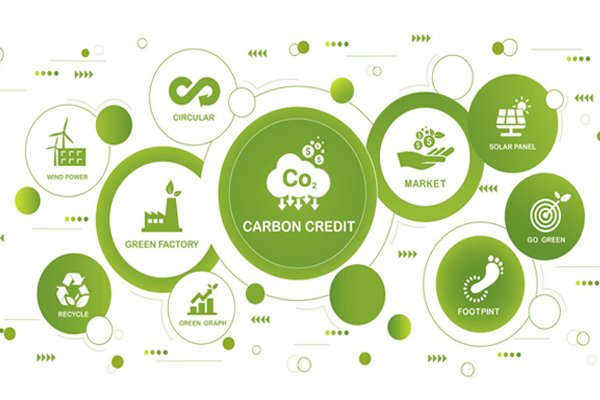

Why ignoring the rising cost of carbon is the costliest decision of all.
(And Solarwarp® is the future...)
Where It All Began: The Birth of CO₂ Pricing
The idea of putting a price on carbon emissions was born out of a simple economic principle: polluters should pay. The first formal carbon market was launched in 2005 with the European Union Emissions Trading Scheme (EU ETS). It aimed to cap industrial emissions and allow companies to trade emission allowances, creating an incentive to reduce CO₂ output.
From there, the concept spread:
- Sweden introduced a carbon tax as early as 1991, one of the highest in the world today.
- Canada, New Zealand, South Korea, and California followed with their own systems.
While some markets allow flexibility and trading, others impose fixed taxes. The goal across all: make emissions expensive and clean energy attractive.
Can CO₂ Pricing Be Reversed?
Technically, yes. Politically? Increasingly unlikely.
Although carbon pricing faces pushback from industry lobbies and populist movements, several forces protect it:
- International agreements (like the Paris Accord) bind countries to climate targets.
- The EU Green Deal and Fit-for-55 mandate rising carbon costs.
- Carbon Border Adjustment Mechanisms (CBAM) pressure global trade partners to price emissions.
Moreover, as governments increasingly depend on CO₂ revenues, reversing course would create massive fiscal holes.
In short: carbon pricing is here to stay.
The CO₂ Price Is No Longer Just a Number
In 2024, Germany set the CO₂ certificate price at €45 per ton. By 2026, this will rise to €65. But what happens next? Political signals suggest that by 2030, prices will exceed €150/t, with some models forecasting a rise to €250-300/t by 2035.
This is not speculation. It is climate policy made visible through market signals.
Carbon Will Become a Luxury Commodity
In a net-zero economy, CO₂ is not just taxed—it's phased out. The pricing of emissions will:
- Penalize fossil-based heating, industry, and logistics
- Redirect investment to low-carbon infrastructure
- Create significant cost pressure for households
Even conservative estimates show that heating with gas could double in cost by 2030 solely due to CO₂ penalties.
Market-based Fortune Telling
Think of CO₂ pricing as the stock ticker of global climate action. When prices go up, it's a signal that the world is finally internalizing the true cost of emissions.
Several trends drive this upward curve:
- EU Emissions Trading Scheme tightening
- Global carbon border taxes (CBAM)
- Climate liability lawsuits and insurance risks
- National budgets depending on CO₂ revenues
Carbon neutrality will become economically inevitable.
Solarwarp® as a Hedge Against Carbon Volatility
Solarwarp® stores energy without emitting CO₂. It's not just a climate tool—it's a financial strategy. By 2035:
- Households with Solarwarp® systems could save thousands in avoided CO₂ fees
- Clean heat will become a premium feature for real estate valuation
- Off-grid readiness will boost energy security and resale value
Carbon-free energy storage isn’t just smart. It will be mandatory.
The Bottom Line: Pay Now, or Pay More Later
By 2035, the question will not be if you pay for carbon, but how much longer you can afford to.
Solarwarp® doesn’t wait for the future – it builds it.
solarwarp.energy – Future-proof your home. Breathe price stability.