
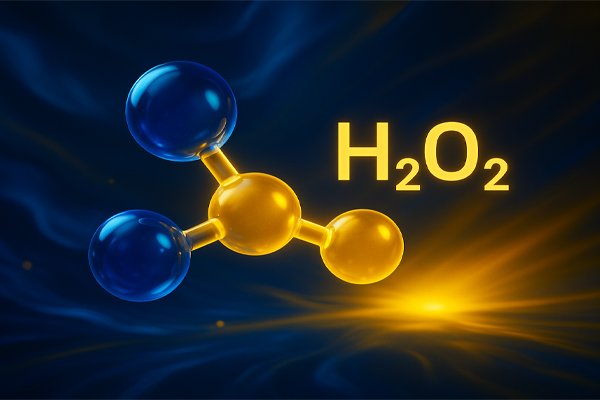

How Hydrogen Peroxide is Shedding Its Sterile Image and Powering the Future
The Origins: Perhydrol as a Clean Antiseptic
Perhydrol, the historical name for high-concentration hydrogen peroxide (H₂O₂), has long been recognized for its antiseptic and disinfectant properties. Dating back to its synthesis in the early 19th century, hydrogen peroxide quickly found use in medical and industrial applications due to its oxidative power and decomposition into only water and oxygen — a trait unmatched by most synthetic chemicals.
The term Perhydrol emerged in the early 20th century, typically denoting hydrogen peroxide in concentrations of 30–70%, primarily used for sterilization, bleaching, and even in rocket propulsion due to its energetic decomposition.
Wartime and Rocketry: A Reactive Leap Forward
During World War II, Perhydrol gained notoriety as a propellant component in German rocket systems, specifically the Messerschmitt Me 163 Komet. In this context, its role was not as a disinfectant, but as a hypergolic oxidizer — reacting violently with fuels or decomposing catalytically to generate high-pressure steam and oxygen.
This phase underscored a new dimension of H₂O₂: energy release and thrust. However, the technology remained niche, hindered by instability, toxicity at high concentrations, and a lack of application outside of aerospace and military contexts.
The Quiet Middle Years: Industrial Workhorse
Throughout the latter half of the 20th century, hydrogen peroxide became a staple in textile bleaching, paper processing, and wastewater treatment. It was cheap, effective, and environmentally benign — decomposing without polluting byproducts.
Yet, Perhydrol remained largely out of the spotlight, relegated to industrial zones and laboratory shelves. It lacked the glamour of lithium batteries or the clean promise of hydrogen gas. Energy sectors dismissed it as impractical for large-scale storage or transport.
The Energy Transition Awakens New Potential
The turning point came with the decentralization of energy and the demand for seasonal energy storage. Here, Perhydrol began to re-enter the stage — not as a fuel or cleaning agent, but as an intermediate for solar energy storage.
Electrochemical pathways were refined to allow for the direct synthesis of H₂O₂ from water and oxygen using renewable electricity — a process known as plasmolytic hydrolysis or solar electrolysis. This breakthrough bridged the gap between sunlight, chemical energy, and scalable storage.
Enter Solarwarp®: By integrating hydrogen peroxide into a controllable chemical loop, Solarwarp® positions Perhydrol as a medium of seasonal solar energy storage, enabling power-to-heat or power-to-water-disinfection with no CO₂ emissions.
Market Momentum: Hydrogen Peroxide's Rising Demand
Recent market analyses underscore the growing significance of hydrogen peroxide. According to Precedence Research, the global hydrogen peroxide market was valued at approximately USD 6.69 billion in 2024 and is projected to reach around USD 11.54 billion by 2034, expanding at a CAGR of 5.6% over the forecast period. The Asia Pacific region, in particular, accounted for a significant share of the market and is anticipated to grow at the fastest CAGR of 5.25% during the forecast years.
This surge is attributed to its widespread applications in pulp and paper bleaching, wastewater treatment, and as a disinfectant in healthcare settings. The compound's eco-friendly decomposition into water and oxygen makes it a preferred choice over chlorine-based alternatives.
Perhydrol Today: Legal, Stable, and Scalable
Critically, Perhydrol — unlike hydrogen gas — is:
Legally available in concentrations up to 60% in many jurisdictions
Non-explosive under standard handling
Storable for weeks to months without pressurization or cooling
Safe with low-cost stabilizers
It’s these attributes that make H₂O₂ a rising star in the era of climate-neutral infrastructure. While lithium faces geopolitical supply risks and hydrogen gas presents storage challenges, Perhydrol offers a sweet spot: low-carbon, high-density, and thermochemically versatile.
What Comes Next?
Expect to see hydrogen peroxide exit the lab and enter the home. From container-based solar-to-heat systems to industrial cleaning loops powered by renewables, Perhydrol is poised to evolve from chemical commodity to climate enabler.
As legislation tightens around carbon, and as the EU ETS expands, the quiet molecule once dismissed as a simple disinfectant might prove to be a keystone of post-fossil energy storage.
solarwarp.energy – Reinventing Perhydrol for a Decarbonized Future.
It’s not just a molecule. It’s a mission.